Fisher & Paykel Healthcare
Respiratory humidification systems
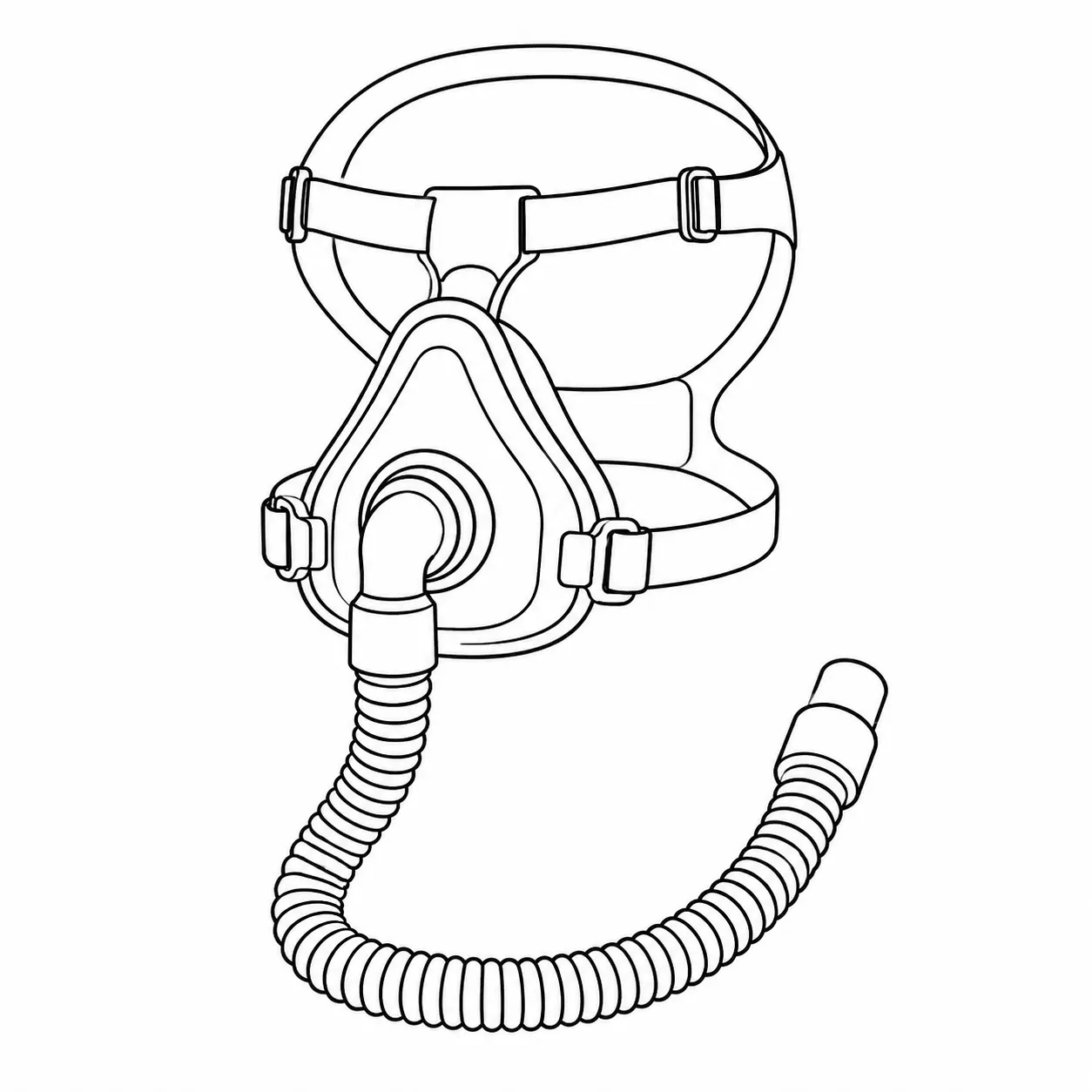
- Industry
- Medical devices
- Country
- New Zealand
- Founded
- 1969
- Revenue
- NZ$2.31B (FY2026)
The world leader in heated humidification for respiratory care: the systems that warm and moisten the air ventilated patients breathe. Sold in about 120 countries, its devices sit beside hospital beds worldwide while the Auckland company itself stays quietly unknown.
In 1968, in an Auckland hospital, the prototype for what would become a global medical company was assembled from an Agee preserving jar, an aluminium scroll and a sheet of blotting paper [1].
Agee is the New Zealand brand of home-canning jar, the kind a family keeps peaches in over winter. The scroll and the blotting paper were there to give water a large surface to evaporate from. The device was meant to solve a problem an intensive-care doctor named Matt Spence kept seeing on his ward: patients on mechanical ventilators were developing dry, infected windpipes, because the machine pushed gas straight past the nose and throat that would normally have warmed and moistened it [2]. Spence had run New Zealand’s first intensive care unit since 1958, and he understood the physiology better than anyone in the country [3]. What he needed was an engineer.
He found two. Alf Melville, a government electrical engineer, helped build the jar. Dave O’Hare, a senior engineer at a local appliance company called Fisher & Paykel (then known for refrigerators and washing machines), took the idea and turned it into something a factory could make [2]. The first commercial respiratory humidifier was sold in 1970 [2]. Fifty-six years later, the company that grew out of that jar is the most valuable listed business in New Zealand, and it still, essentially, sells warm wet air.
The thesis
Most people who have heard of Fisher & Paykel Healthcare at all heard of it once, during the pandemic, as “that New Zealand ventilator company.” That undersells it twice over.
It is the world leader in respiratory humidification: the unglamorous but genuinely difficult business of delivering body-temperature, fully saturated gas into a ventilated patient’s lungs without the water condensing back into a puddle on the way. One equity analyst estimates it holds “over 70% market share in the hospital setting across the 120 countries in which it has a presence” [4]. And it has turned that single competence into a razor-and-blades machine so effective that the pandemic, which should have been a one-off windfall, instead let it place a decade’s worth of hardware in two years, every unit of it a consumable annuity for years afterward.
In the year to March 2026 it earned NZ$2.31 billion in revenue and NZ$468.5 million in profit, both records [5]. It is a hidden champion that breaks the usual mould: not small, not private, not family-owned, but the biggest company on its national exchange, invisible for the simple reason that nobody looks twice at the humidifier beside the bed.
The niche
A box that warms and wets some air sounds like the least demanding product in the hospital. It is closer to the opposite.
Start with the target. Air deep in the lungs is not room air. By the time inhaled gas reaches the carina (where the windpipe splits toward each lung), a healthy body has brought it to 37°C and 100% relative humidity, which works out to about 44 milligrams of water in every litre of gas [6]. Clinicians call that condition BTPS, “body temperature, pressure, saturated,” and it is not optional. The nose and upper airway do roughly three-quarters of that conditioning work on every breath [6].
Now put a tube down the patient’s throat. Intubation bypasses the nose entirely, so the machine has to supply all of the heat and moisture the nose used to add [6]. Get it wrong and the consequences are not cosmetic. Below about 30 mg/L of humidity for a day, or 25 mg/L for even an hour, the airway lining begins to fail: the tiny cilia that sweep mucus upward stop working, secretions dry and thicken, and in the worst case they harden until they block the breathing tube itself. That is a sudden, life-threatening event in a patient who cannot breathe on their own [6]. The stakes of getting warm wet air slightly wrong are measured in mortality.
Then there is the part that makes it genuinely hard to engineer. The gas has to travel about a metre and a half, down a plastic tube, through an intensive-care room chilled to around 22°C, and arrive still at 37°C and still saturated. Every degree the tube wall loses to the room pulls water out of the gas as liquid, a phenomenon the field calls “rainout.” Rainout pools in the tubing, raises the resistance the patient breathes against, can wash back toward the airway, and breeds bacteria in the standing water. Worse, every drop that condenses in the tube is a drop that never reaches the lungs, so the rainout that fouls the circuit is also quietly drying out the patient. Delivering saturated body-temperature gas across a cold room without it raining is the whole problem, and it is not a trivial one. It is telling that the independent industry surveys of respiratory equipment name only a handful of companies that “dominate the respiratory equipment market”: Dräger, Philips, Covidien and Fisher & Paykel [7].
The origin
The jar was never really the invention. The invention was everything that came after it (the decades Fisher & Paykel spent learning to defeat rainout), and the decision to keep going deeper into one narrow problem instead of wandering off into easier ones.
The company had come into medicine sideways. Fisher & Paykel was founded in 1934 as an appliance importer and, behind New Zealand’s tariff walls, became an appliance manufacturer almost by accident. The medical work started as a division on a mezzanine floor and grew faster than anyone expected: by 1990 it had been renamed Fisher & Paykel Healthcare and was turning over NZ$29 million a year [2]. It was growing at 20 to 30 percent while the whiteware business plodded along in single digits, and in 2001 the group did the logical thing and split in two, listing the healthcare arm separately on the New Zealand and Australian exchanges [2]. The appliance business was eventually sold to China’s Haier. The healthcare business stayed in Auckland and kept its head down.
What it did not do is instructive. It never bought its way into a new field. Every product line it added (sleep-apnea masks, nasal oxygen therapy, surgical humidification) it built in-house, as an extension of the same core skill of conditioning gas to the body’s own conditions. The current chief executive, Lewis Gradon, is a physicist who joined in 1983 as a product engineer and is a named inventor on the patents underneath the sleep-apnea business; his predecessor, Michael Daniell, ran the company for fifteen years and is a co-inventor on the same humidified-CPAP patent. This is a company run, for half a century, by the engineers who designed the products.
The climb
For most of its life the climb was steady and dull, in the way the best compounding is: revenue up roughly ten to twenty percent a year, a new therapy every few years, no drama. Then came 2020, and the dullest medical-device company in the southern hemisphere found itself holding one of the most important products in the world.
Fisher & Paykel had people on the ground in Wuhan when the outbreak began, placing equipment and training staff, and the warning travelled home early. “At the time we were thinking, gee, the whole world’s going to look like Wuhan,” Gradon later recalled [8]. The company activated its crisis team in January, was declared an essential service, and redirected thousands of staff onto respiratory production. It hired around 700 factory workers in Auckland and hundreds more in Mexico. Output of some hospital hardware went “up about fourfold.” And it did all of this as the global supply chain seized: “Airfreight disappeared at one stage down to 1% of its normal volume,” Gradon said [8].
Its nasal high-flow therapy, Optiflow, turned out to be one of the frontline treatments for COVID-19, a way to support a struggling patient’s breathing without putting them on a ventilator at all. Revenue jumped 56 percent in a single year, profit 82 percent, and Fisher & Paykel became the first New Zealand company worth more than NZ$20 billion. “We kind of realised we had a tiger by the tail,” Gradon said. “I don’t think we ever imagined until relatively recently that we would be the most valuable company in New Zealand” [8].
The interesting part is what the surge did to the business model, and it is worth understanding the model before admiring the number.
The market and business model
Fisher & Paykel sells its hospital customers two very different things. One is hardware: a humidifier base unit, a piece of capital equipment that a hospital buys once and uses for years. The other is consumables: the single-patient breathing circuits, chambers and cannulas that plug into that base unit and are thrown away and replaced, patient after patient. The base unit only accepts Fisher & Paykel’s own consumables. It is the classic razor-and-blades arrangement, and the numbers are stark: in a normal year, 73 percent of the company’s hospital revenue is consumables and only 27 percent is hardware [9].
Now look again at what the pandemic actually did. It did not just spike revenue; it planted razors. “Over the last two financial years we have supplied $880 million of hospital hardware, the equivalent of approximately 10 years’ hardware sales prior to COVID-19,” the company reported in 2022 [9]. A decade of installed base, placed in twenty-four months. Every one of those humidifiers is a machine that will pull Fisher & Paykel consumables through it for years. The spike was the machines. The business is the refills.
That is why the post-pandemic dip, when it came, was survivable rather than fatal. As hospitals worked through their sudden glut of hardware, revenue fell 15 percent in 2022 and another 6 percent in 2023, and the gross margin was squeezed by expensive airfreight down to a trough of 59 percent. But the consumables kept selling, because the installed base kept growing, and by 2026 revenue had recovered to its NZ$2.31 billion record with the gross margin climbing back toward the company’s long-standing 65 percent target [5]. The recurring half of the business is the safe half, and in a razor-and-blades model the crisis that floods the world with your razors is, eventually, the best thing that can happen to you.
There is one obvious vulnerability in the arrangement, and it is geographic. Fisher & Paykel makes roughly 55 percent of its volume in New Zealand and 45 percent in Mexico, and about 43 percent of its revenue comes from the United States [10]. When Washington’s 2025 tariffs landed, the Mexican-made products were largely shielded by the USMCA trade agreement; the ones that were not were the devices shipped from New Zealand, which is how a 10 percent tariff on New Zealand goods turned into roughly a 90-basis-point drag on the company’s gross margin [5]. Management chose to absorb it rather than pass it to hospitals. It is the price of keeping the factory, and the engineers, at home.
The moat: why they win
Run Fisher & Paykel against Hermann Simon’s checklist of hidden-champion traits and it passes most of them at the extremes. Narrow focus: one competence, fifty-five years. Globalisation from a tiny home base: about 99 percent of revenue earned outside a country of 5.3 million people. Innovation intensity: research and development has been held at roughly 10 percent of revenue for well over a decade [5]. But the moat is not really any single one of these. It is three things stacked on top of each other, and only one of them is the technology.
The first is the razor-and-blades lock-in already described. A hospital that standardises its wards on Fisher & Paykel humidifiers has bought years of capital equipment that accepts only Fisher & Paykel consumables, trained its nurses on Fisher & Paykel interfaces, and written its clinical protocols around them. Switching is not a purchasing decision; it is a retraining programme.
The second is subtler, and it is made of published science. When researchers ran the landmark trials that turned nasal high-flow oxygen from a niche technique into a global standard of care (most famously the FLORALI study in the New England Journal of Medicine in 2015, which found a striking survival benefit), they ran them on Fisher & Paykel’s Optiflow equipment [11]. The clinical guidelines that hospitals now follow were built on those trials. A competitor cannot simply copy the tube; it has to re-earn a decade of citations in the medical literature, which takes a decade it does not have.
The third is the most powerful, and the most counterintuitive: the market is too small for a giant to bother attacking, and too hard for a small challenger to survive in. The core medical-humidifier market is worth only around a billion US dollars, far too little to justify a diversified giant’s species-by-species research programme, which is why the field is left to a focused specialist. And when a focused challenger did emerge, the outcome was brutal. Vapotherm, an American company, built its entire business on high-flow therapy and went public to attack exactly Fisher & Paykel’s niche; its own filings named Fisher & Paykel as the competitor it faced in heated humidified high-flow [12]. Vapotherm’s revenue peaked at about US$126 million in 2020 and then collapsed; in 2024 it was taken private at US$2.18 a share, a fraction of its former value [13]. Fisher & Paykel’s hospital division alone is roughly ten times Vapotherm’s best year ever.
Even the industry number one treats Fisher & Paykel with respect. ResMed, the US$5-billion sleep-device leader, lists Fisher & Paykel second among its primary competitors in its own annual filing [14]. And when ResMed took Fisher & Paykel to court in 2016 (a patent war fought simultaneously across the United States, Germany, Australia and New Zealand), the two sides fought for two and a half years and then settled in 2019 with no payment and no admission of liability by either party [15]. The giant threw its full legal weight at the company from Auckland across four jurisdictions and walked away with nothing. That is what a defensible position looks like from the outside.
The clearest way to see the moat, though, is to look at the company Fisher & Paykel displaced. The old incumbent in respiratory humidification was Hudson RCI, whose bubble-and-wick humidifiers were the previous generation of the technology. Hudson passed through the industrial conglomerate Teleflex, which after seventeen years of ownership sold the entire respiratory line (active humidification included) to Medline in 2021 for US$286 million, on revenue that had drifted down to US$139 million [16]. Over the same span in which the incumbent’s business shrank by a quarter, Fisher & Paykel’s grew roughly tenfold. The niche did not stay still; the leadership of it simply changed hands, from a company that treated humidification as one line among many to a company that treated it as the whole point.
Ask Gradon how a company stays that focused and he describes it as an act of refusal. “We leave money on the table, over and over again,” he told BusinessDesk. “I’ve lost track of how many times I’ve said, ‘Man, if we had nothing else to do, jeez, I’d do that’” [17]. The discipline that a classic hidden champion inherits from a controlling family, Fisher & Paykel has had to build into its culture instead, because it has no controlling family at all.
The cracks: what could break it
A profile with no shadows reads like a press release, and this company’s have specific shapes.
The first is the currency it cannot control. With almost all of its revenue earned abroad and much of its cost base in New Zealand dollars, the exchange rate is a permanent lever on reported profit: the FY2026 result grew 24 percent in reported terms but 28 percent once currency was stripped out [5]. Fisher & Paykel has hedged this actively for decades; it cannot make it go away. Michael Daniell, the previous chief executive, once explained why the company nonetheless keeps its research in New Zealand rather than chasing cheaper currencies elsewhere: “If we moved the R&D team to, say, California, that figure would be closer to 15%,” he said of R&D as a share of revenue. “We’ve got a competitive advantage” [18]. The currency is a tax on staying home, and the talent is why they pay it.
The second is concentration. Nearly all of the company’s revenue comes from a single clinical field, respiratory care, so a shift in reimbursement or clinical practice hits everything at once. And the growth engine now depends on hospitals adopting new therapies and on the severity of each Northern Hemisphere winter. A softer respiratory season is a softer year. The pandemic itself proved how violent the swings can be: the same demand surge that drove revenue up 56 percent in 2021 drove profit down 34 percent two years later as it unwound.
The third is the ordinary risk of making complicated machines. In 2024 the company issued voluntary recalls of its Airvo 2 and Airvo 3 devices, one for alarms that could be too quiet to hear, one for a software fault that could deliver room air instead of oxygen [19]. Neither was catastrophic, and the industry’s genuinely dangerous recall in these years belonged to a competitor, Philips, not to Fisher & Paykel; but a company whose products keep people breathing has no margin for the kind of quality lapse that a consumer-goods maker would survive.
The fourth is the price of ambition. In 2024 a single year absorbed a NZ$98 million write-down on land the company had bought at Karaka for a second Auckland campus, a tax change and extra recall costs, enough to cut reported profit almost in half [20]. The land is part of a thirty-to-forty-year plan for a campus that may not open its first building until the 2030s [21]. That is either admirable long-termism or capital tied up in a bet on demand that is decades from paying off, depending on the decade you are standing in.
And underneath all of it sits the valuation. The market prices Fisher & Paykel at close to fifty times earnings, a technology-stock multiple for a company growing revenue in the mid-teens. The business can be excellent and the stock can still be expensive; the two are not the same statement, and the gap between them is where the risk lives.
Takeaways
A hidden champion does not have to be small. Fisher & Paykel is the largest listed company in its country and still unnameable to almost everyone outside it, because its product sits out of sight beside a hospital bed. Invisibility can come from where a thing lives, not from how little of it there is.
Sell the razor in a crisis; live off the blades for a decade. The pandemic let Fisher & Paykel place ten years of hardware in two, and the consumable revenue followed for years. When demand spikes, expanding the installed base beats raising the price.
Own the evidence, not just the device. The trials that made nasal high-flow therapy a standard of care ran on Fisher & Paykel equipment, so the guidelines were written around it. A rival has to re-earn the medical literature: a moat built out of citations, which cannot be bought.
A niche too small for a giant is a fortress for a focused number one. A billion-dollar market will not justify a diversified giant’s research budget, and it starves a pure-play challenger, as Vapotherm discovered. The gap between “too small to attack” and “too hard to enter” is exactly where a specialist wins.
Discipline can be cultural, not just familial. With no controlling family, Fisher & Paykel still runs on thirty-year horizons and “leaves money on the table over and over.” The independence a hidden champion usually inherits, this one engineered into how it behaves.
One for the replies: Fisher & Paykel started as a device for warming and wetting air, built from a preserving jar, and became a multi-billion-dollar company without ever really leaving that one idea. What other giant do you know that has made essentially one thing, deeper and deeper, for fifty years? Hit reply; the best ones go in a future issue.